
Inside the Lab
The Lab is where we build the thing before it has to work. It’s where frameworks take shape, ideas get oxygen, and experiments get just enough form to test what matters.
Some projects here are speculative. Some are confidential. All are real. These are prototypes, working sketches, and immersive systems designed to provoke, prove, or rethink what’s possible—before scale or certainty set in.
The Witness Project
Spatial journalism for public memory.
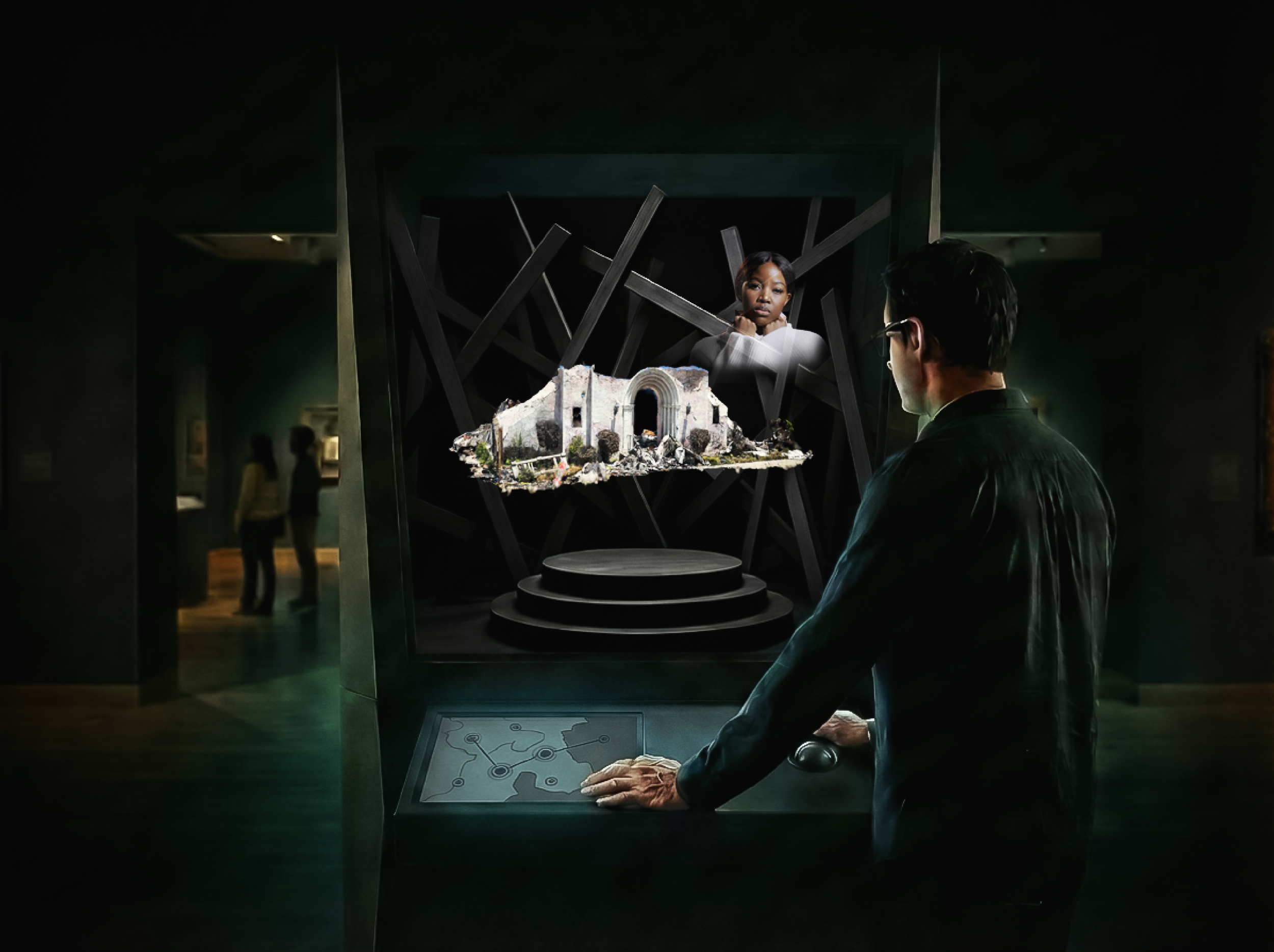
The Witness Project is a headset-free immersive storytelling platform that presents first-person testimony as dimensional, explorable memory.
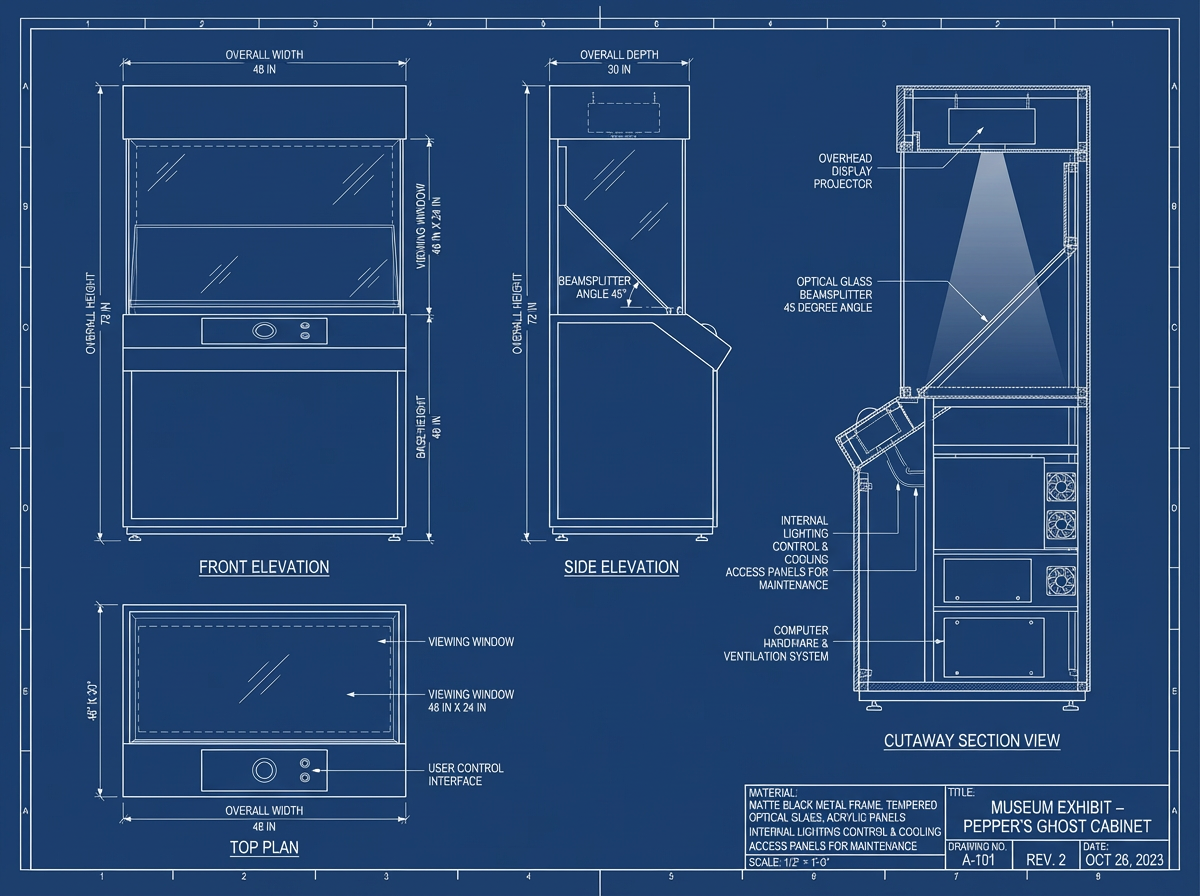
Designed for museums, cultural institutions, civic spaces, and community settings, each Witness installation invites visitors to encounter real stories through spatial scans, oral histories, archival material, and tactile interaction. Instead of asking audiences to put on a headset or enter a private VR experience, The Witness Project creates a shared public encounter: a walk-up kiosk where memory, place, and testimony appear in three-dimensional space.
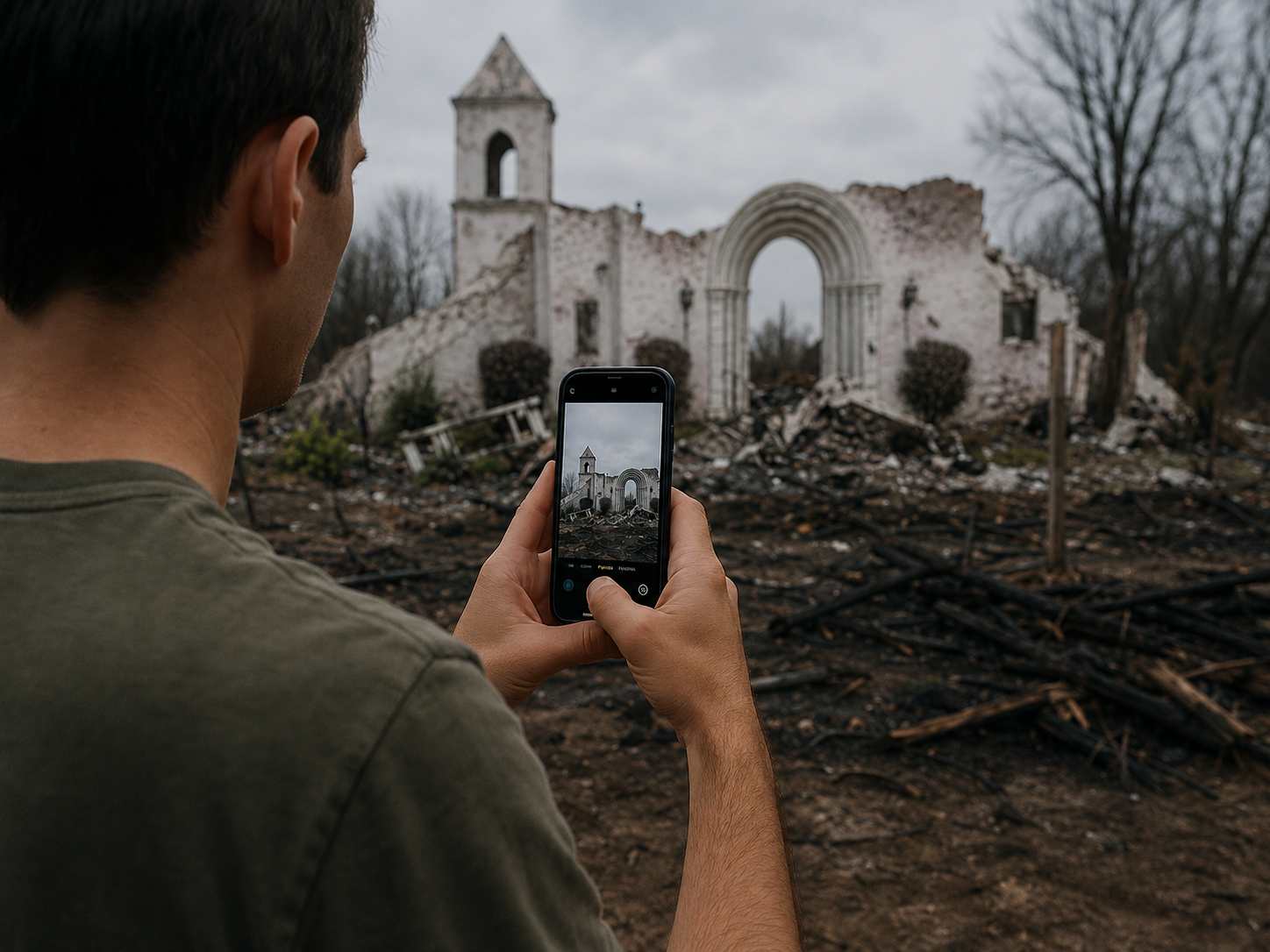
Our first pilot focuses on Altadena, California, where the Eaton Fire destroyed homes, landmarks, and community spaces while leaving residents to preserve the stories of what was lost, what survived, and what comes next.
Using LiDAR, 3D scanning, spatial audio, and carefully edited oral histories, The Witness Project captures places and objects that carry meaning for the people who lived through the fire. These stories are then shaped into modular “Capsules” that can be experienced through a physical kiosk installation and adapted for future public, educational, and digital contexts.
The goal is not spectacle. It is presence.
The Witness Project asks what journalism can become when audiences do not simply read about a place, but stand before it; when testimony is not only heard, but spatially encountered; and when communities are given tools to preserve their own memories in forms that feel alive, accessible, and shared.
Pilot: Altadena Fire Memory Capsule
Format: Headset-free immersive kiosk
Focus: Climate memory, community testimony, recovery, and public history
Created by: Zev Berman, Creator, Creative Director, with Wesley Jones, Founding Creative Partner & Editorial Lead


Rchive.AI – Archival Intelligence in Prototype
Short Description:
Rchive.AI is a knowledge interface for institutions that think in decades, not quarters. It blends private archival material with structured AI—allowing users to query, explore, and converse with complex memory systems in natural language.
The prototype is built for cultural institutions, oral history collections, and knowledge stewards who want their archives to teach, not just store. We’re exploring how narrative framing, AI transparency, and expert-tuned personas can make historical knowledge accessible—and trustworthy—at scale.
Status / Context:
This project is currently in early-stage prototype development, with use cases spanning museums, film archives, and mission-driven research collections.


