
Case Studies
These projects represent the kind of work I lead: cross-disciplinary, hands-on, and deeply structured. I shape the process as much as the outcome, guiding teams through complexity, aligning vision, and prototyping solutions built to scale.
In some cases, I contribute as a writer or director. In others, I help define the product itself. What they share is a mindset: exploratory, rigorous, and grounded in real-world impact.
You’ll find immersive prototypes, AI simulations, narrative frameworks, and R&D environments each emerging from a process where creative structure meets collaborative inquiry.
Case Study 01: Scaling Conversational AI for Workforce Training
Role: Senior Solutions Lead & Account Director
Full-time at Talespin, an immersive learning and AI company
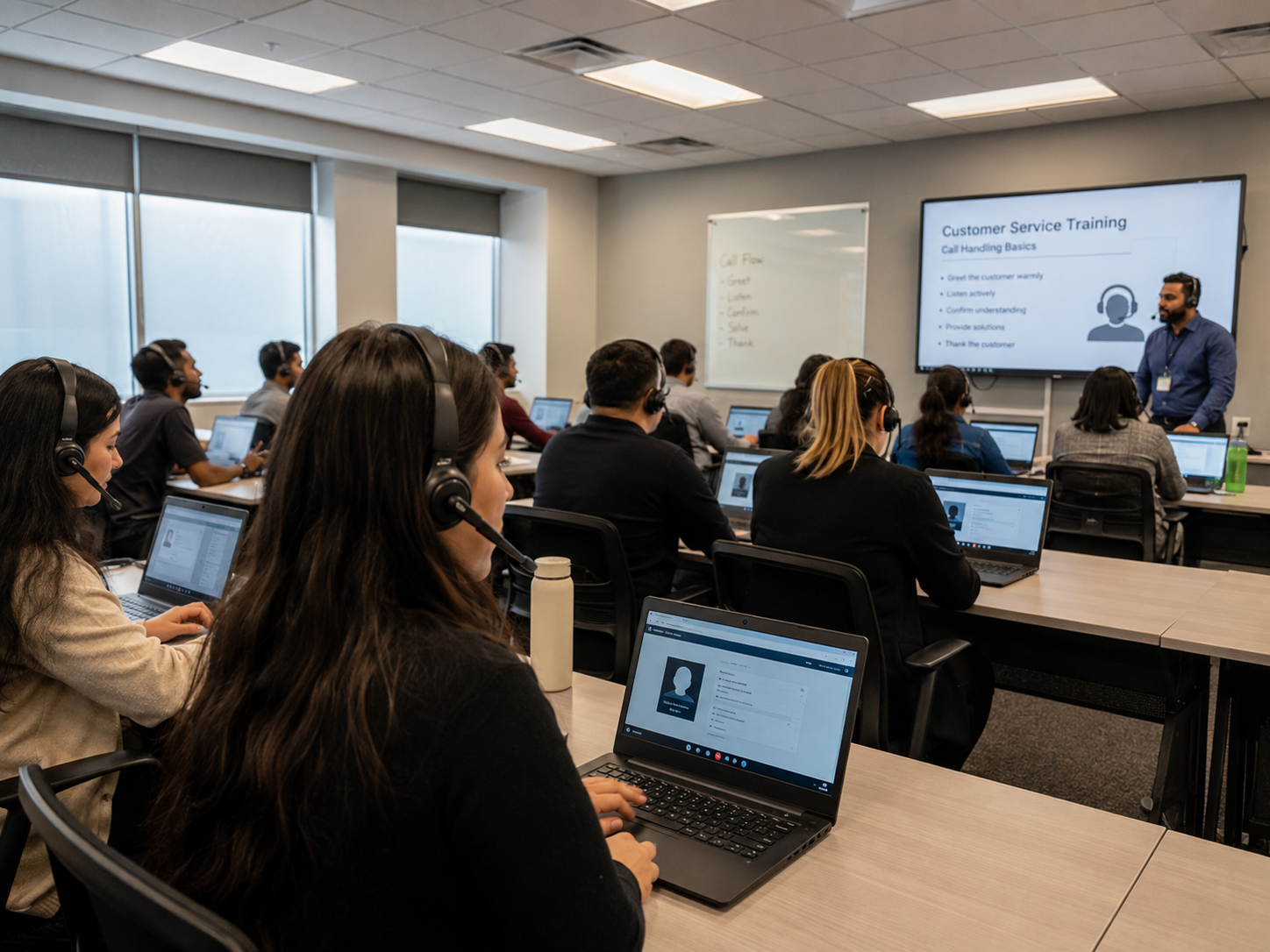
A major enterprise partner was struggling with low engagement around one of their training programs. The learning model relied heavily on scripted language and recall, asking trainees to memorize long passages rather than practice the judgment and adaptability required in real customer conversations.
Usage data and learner feedback made the problem visible. Working with our learning and development team, I developed a proposal to replace memorization with realistic, voice-driven simulation.
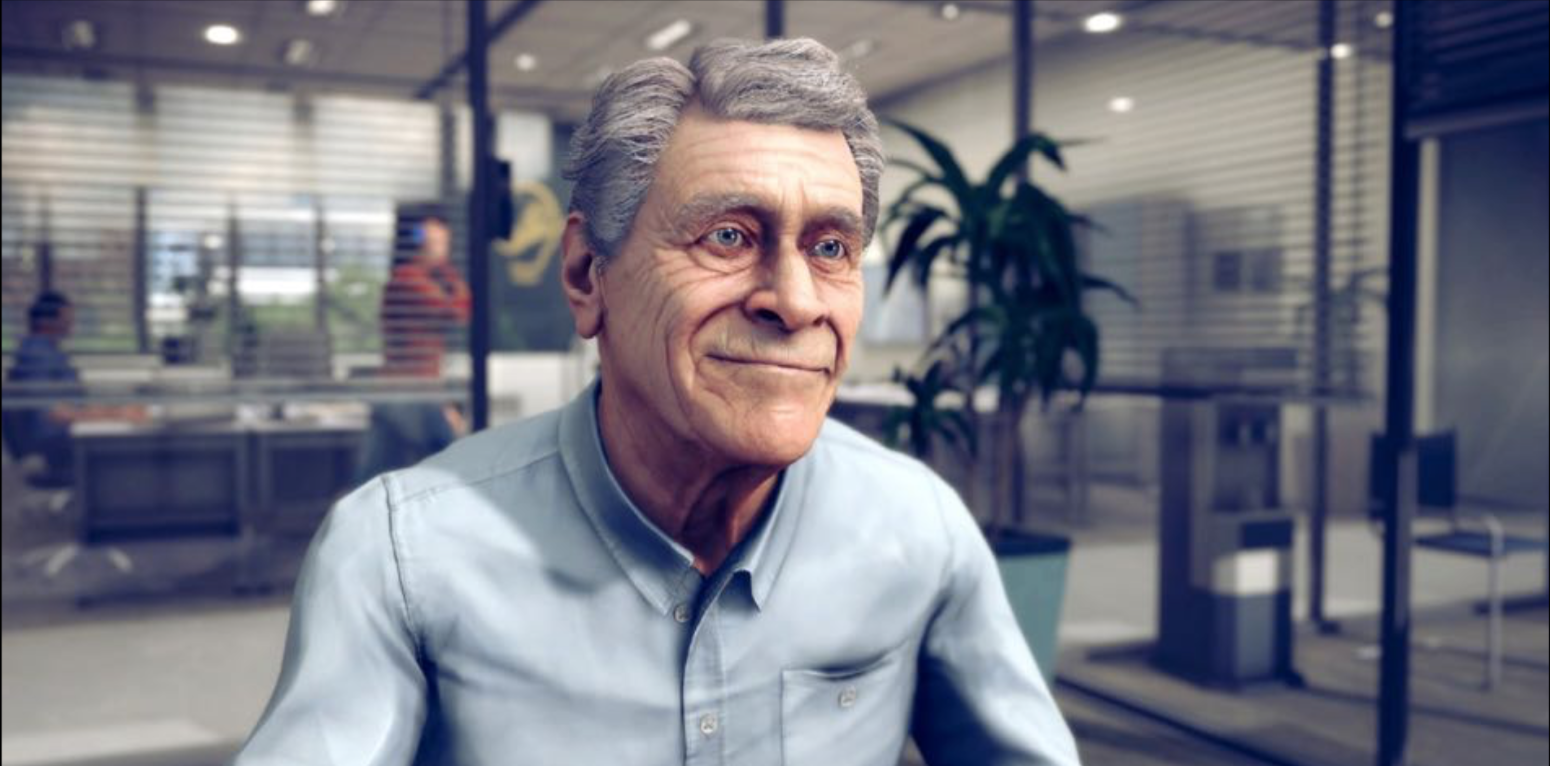
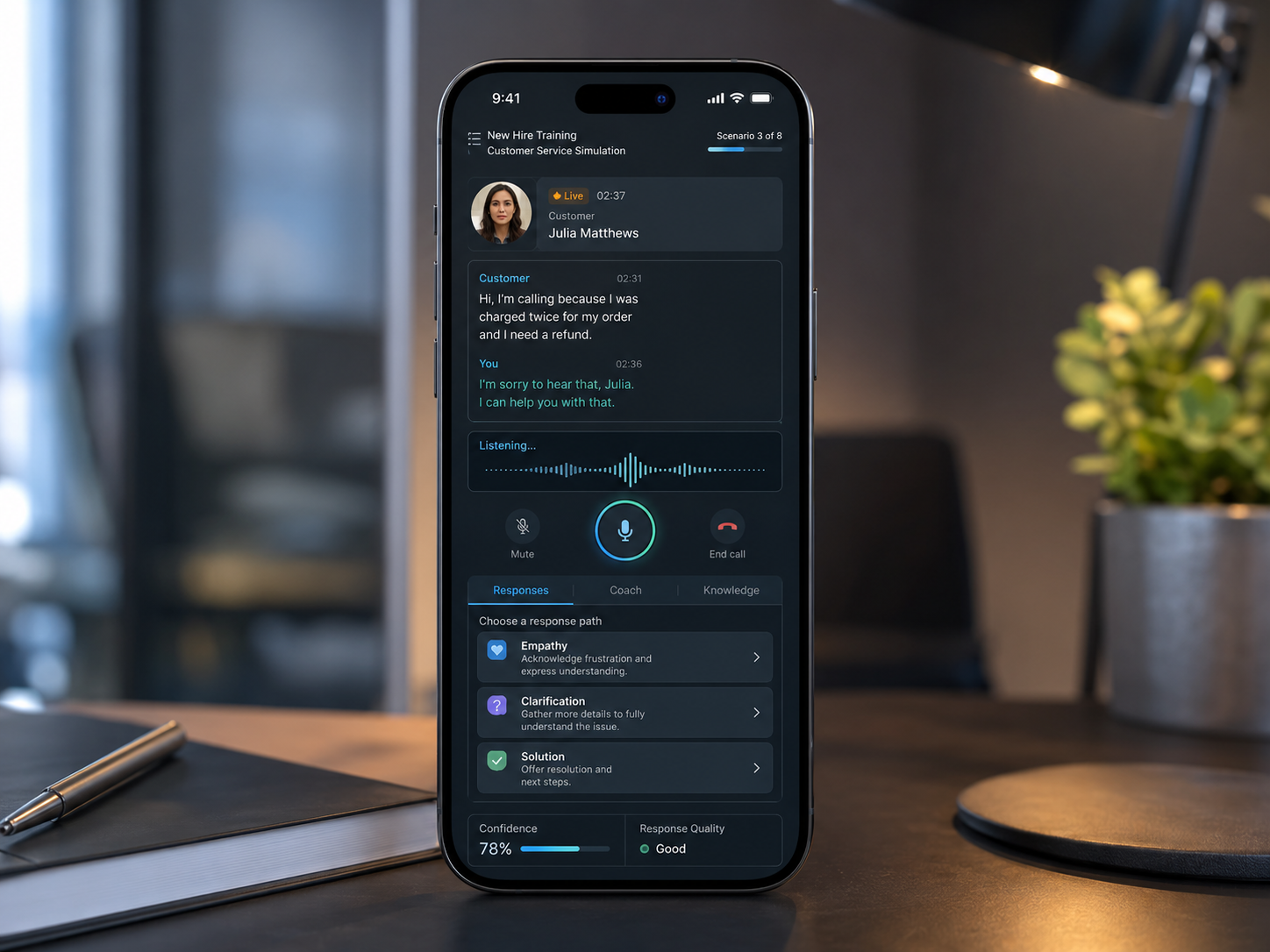
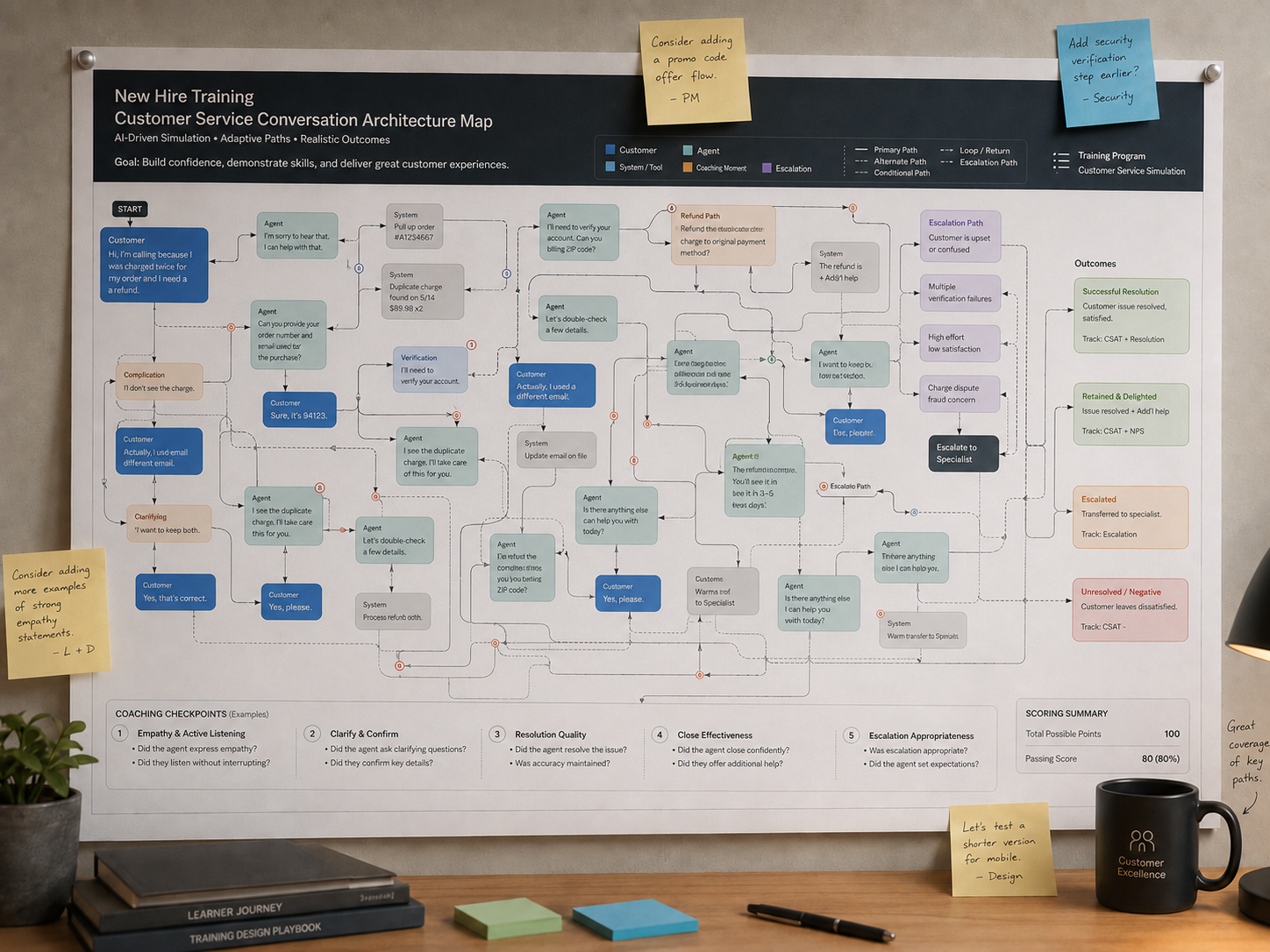
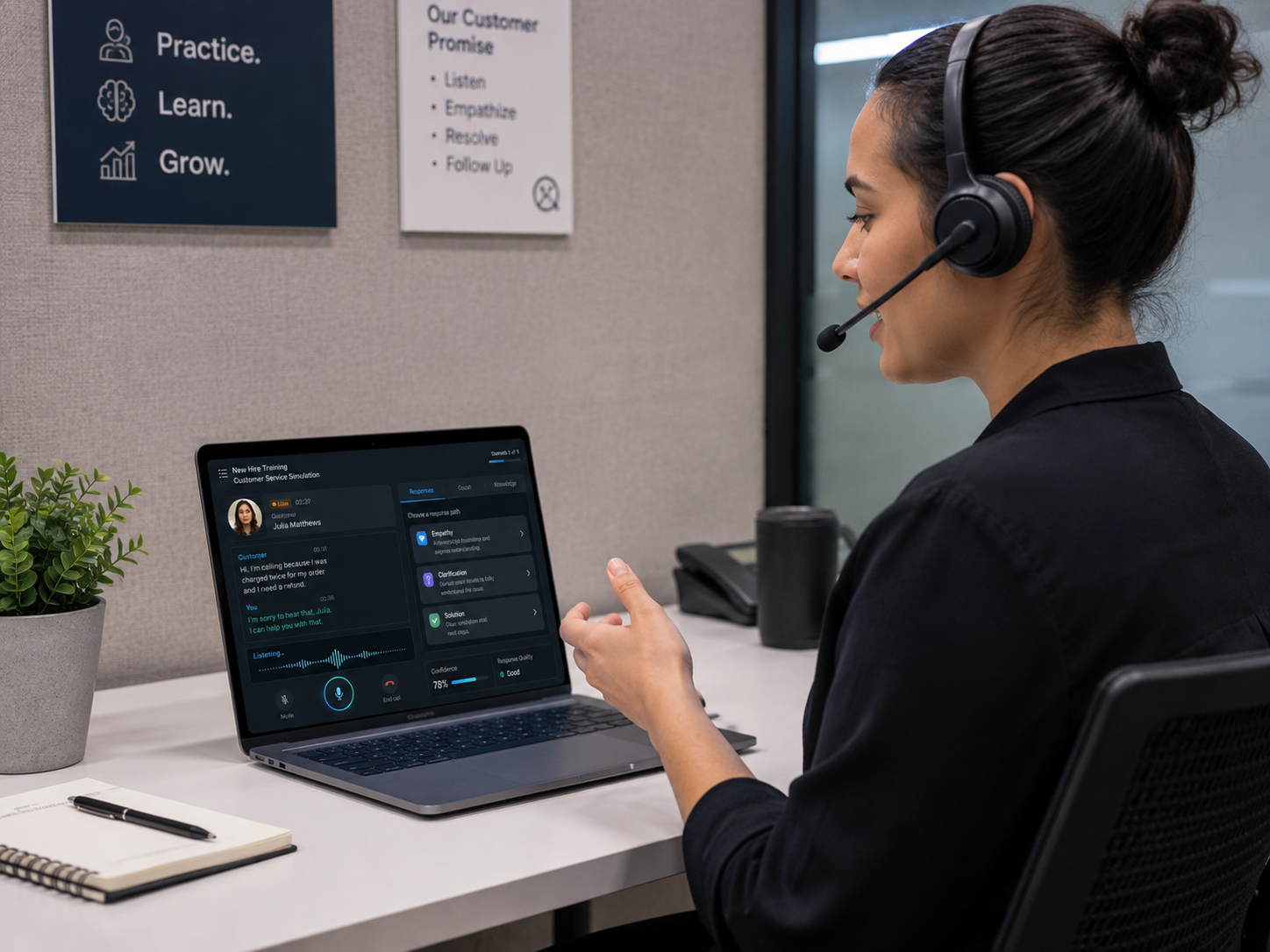
Drawing on real-world call patterns and recurring customer challenges, we designed branching conversations that let trainees practice responding to realistic situations. I oversaw the virtual-human implementation, working with our developers to integrate Microsoft Azure’s natural-language processing and understanding capabilities. We configured alternative phrasings and example utterances so the system could recognize user responses and advance the conversation to the appropriate next set of options.
During initial usage, I reviewed interaction logs to identify where conversational exchanges were failing and worked with the development team to troubleshoot and refine the experience.
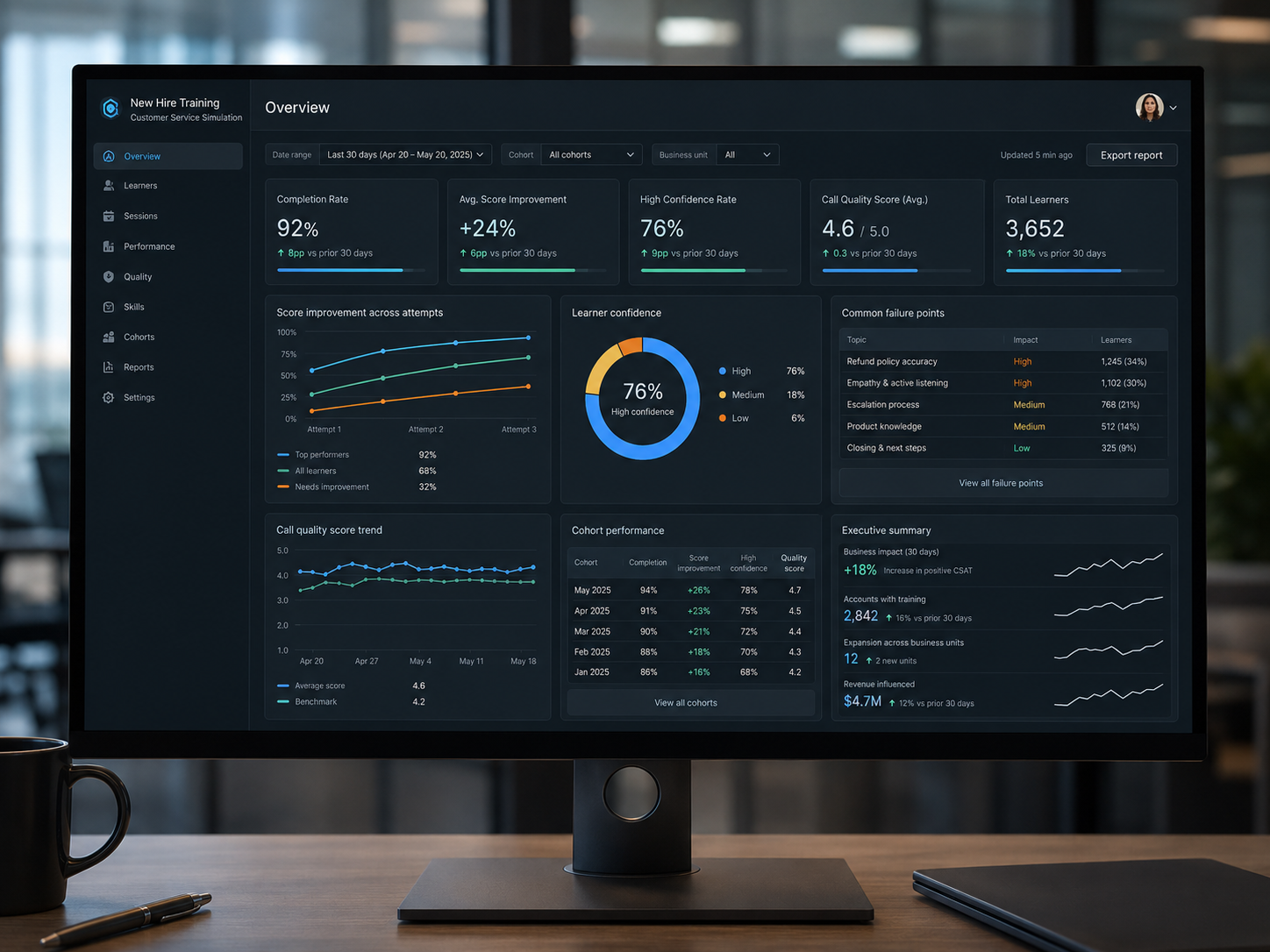
Because the simulations ran on laptops and mobile devices, learners could practice privately and repeatedly without requiring instructors or specialized hardware. The client could track participation, progression, and skill improvement across cohorts in real time.
The new approach produced dramatically stronger learner response and measurable performance gains. I presented the results to a senior client executive, helping secure a multi-million-dollar investment and expand the program into six additional business units—growing the account from approximately $800,000 to $2.4 million in seven months.
Visuals and process artifacts have been reconstructed to convey the nature of the work. No original or proprietary project assets are shown. Client and project details withheld under NDA.
Case Study 02: Future Command Center
Story-Driven Experience Design for Aerospace R&D
Role: Creative Producer, Lead Writer, & Experience Design Lead
Working under contract as Storyworks360 to an advanced prototyping and innovation firm
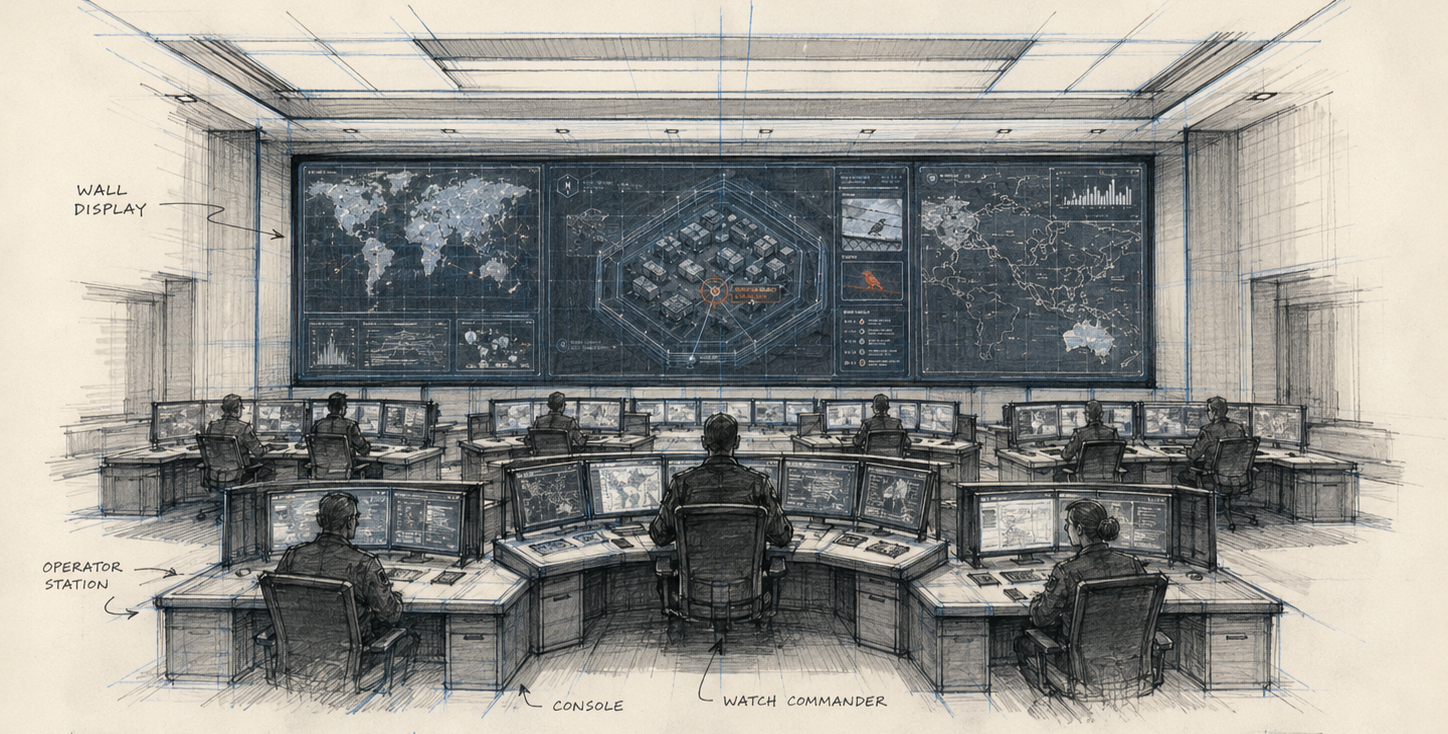
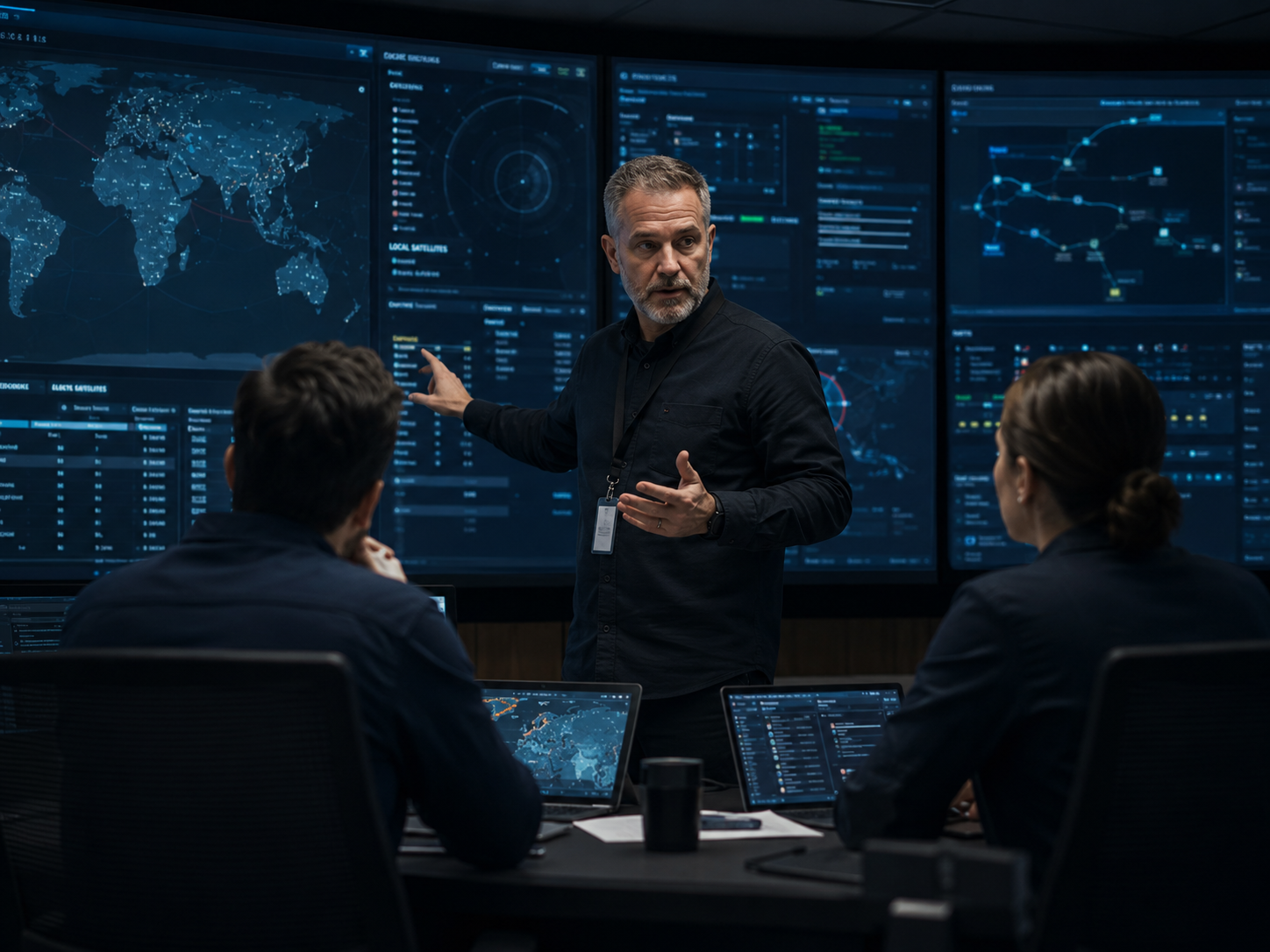
The lead firm was engaged to design, model, and build a scale prototype for a future command center concept. I was brought on to help transform the prototype environment into a live, scenario-driven demonstration for a high-level government audience.
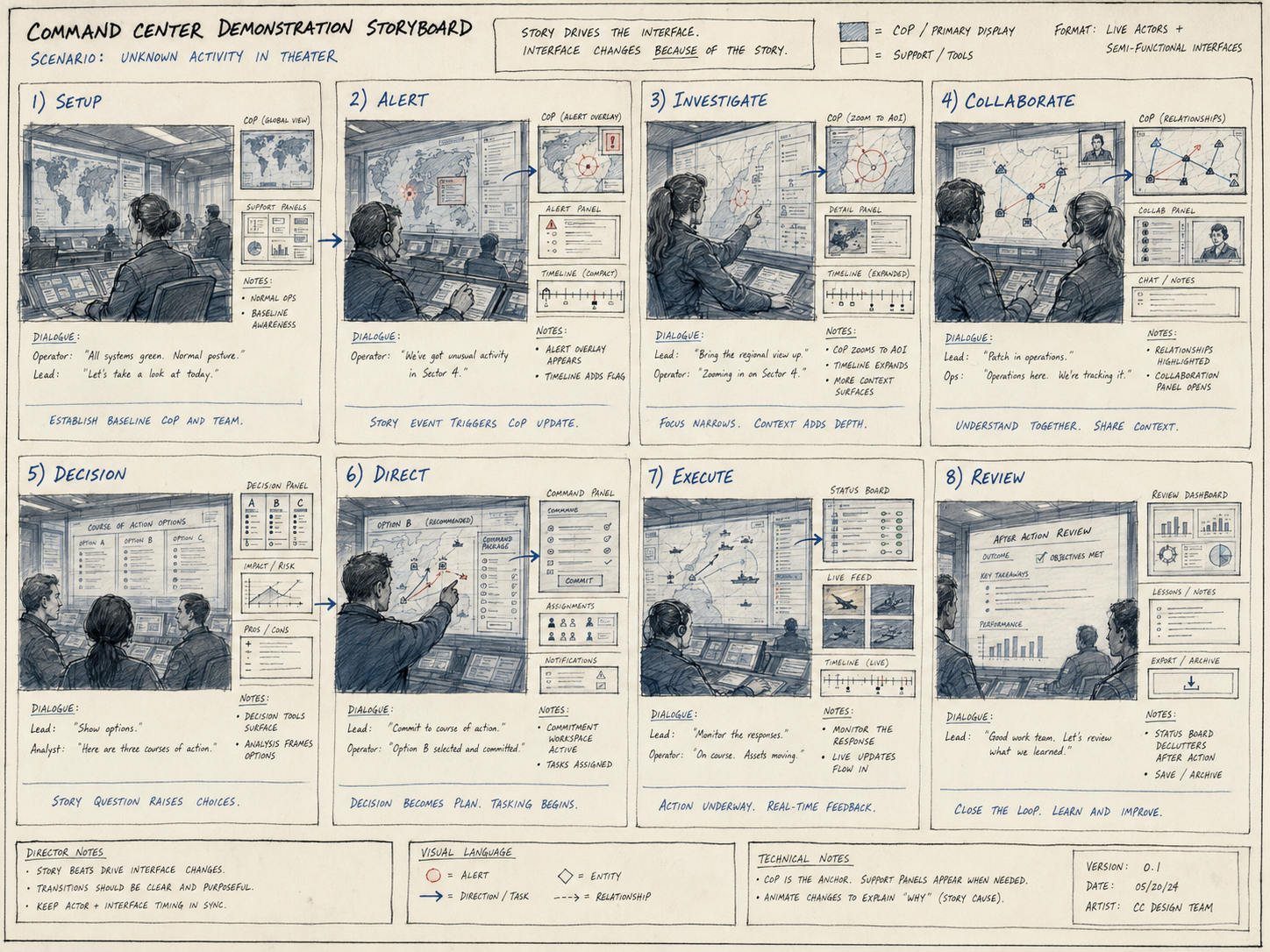
Working closely with the aerospace client’s subject-matter experts, I developed and scripted four future-tech operational scenarios. I also played a lead role in concepting the look, behavior, and narrative function of the scenario-based software featured throughout the command center.
I storyboarded the scenarios so the software, dialogue, and live performance worked together. As each story unfolded, the Common Operating Picture and supporting interfaces shifted focus to reveal the right information at the right moment.
I cast and directed the performers who brought the scenarios to life, shaping the tone, pacing, and coordination of the live demonstration.
I also provided strategic creative guidance on how the narrative, software, and performance could work together to reveal the client’s strengths: adaptability, collaboration, and readiness to lead the next generation of command-and-control systems.
The prototype remained in active use for several years and became a central element of the client’s innovation and pursuit strategy. The broader effort—including the scenarios and software concepts I helped create—contributed to the client’s successful bid for a multi-billion-dollar defense program.
Visuals and process artifacts have been reconstructed to convey the nature of the work. No original or proprietary project assets are shown. Client and project details withheld under NDA.
Case Study 03: Embodied Avionics — Immersive Prototype for Aerospace R&D
Role: Co-Founder & Lead Creative Producer
Under contract to a leading Aerospace firm
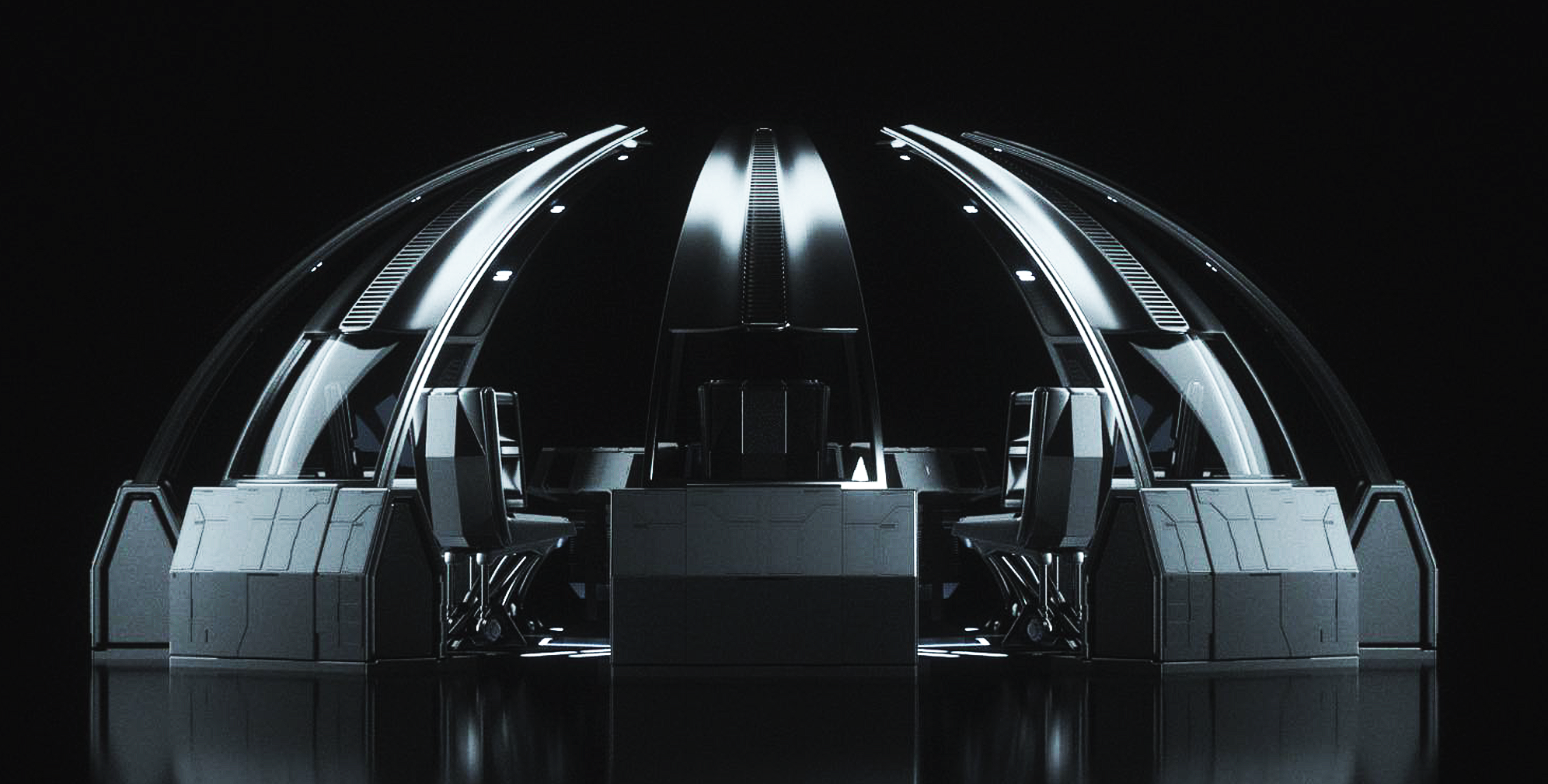
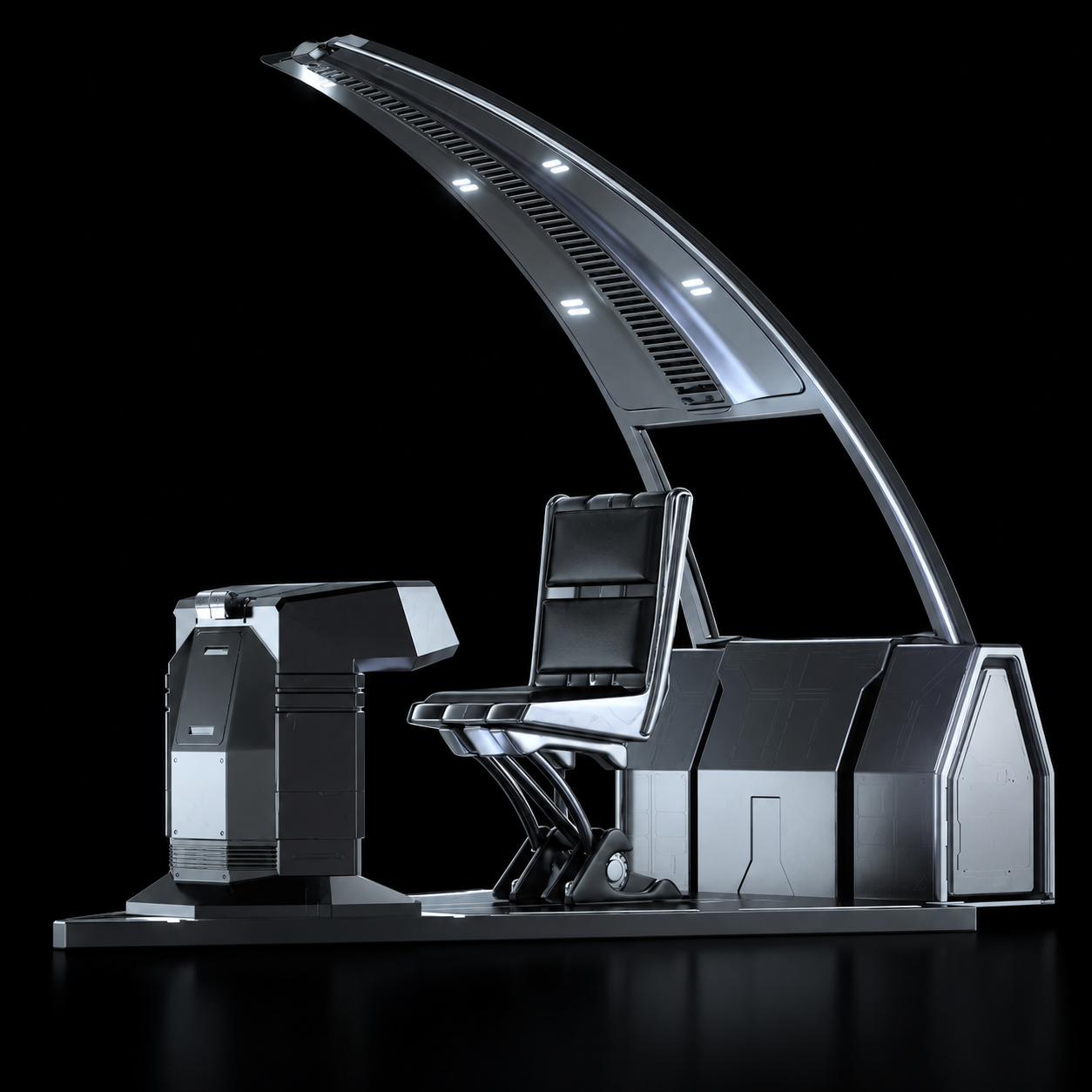
I took a significant creative and financial risk along with two business partners to self-fund an original immersive experience built around our own proprietary three-degree-of-freedom motion platform. The system synchronized pitch, roll, vertical movement, high-frequency vibration, and directed air effects with our branching VR narrative to create a physically embodied form of storytelling without a built-in audience or committed client.
I co-produced the prototype, cast and directed its live-action elements, and played a key role in shaping the experience that became the creative and commercial foundation of our startup.
When contacts at a major aerospace firm experienced our haptic demo, they saw an opportunity to engage us to bring their future avionics concepts to life. We secured a one year engagement in the room.
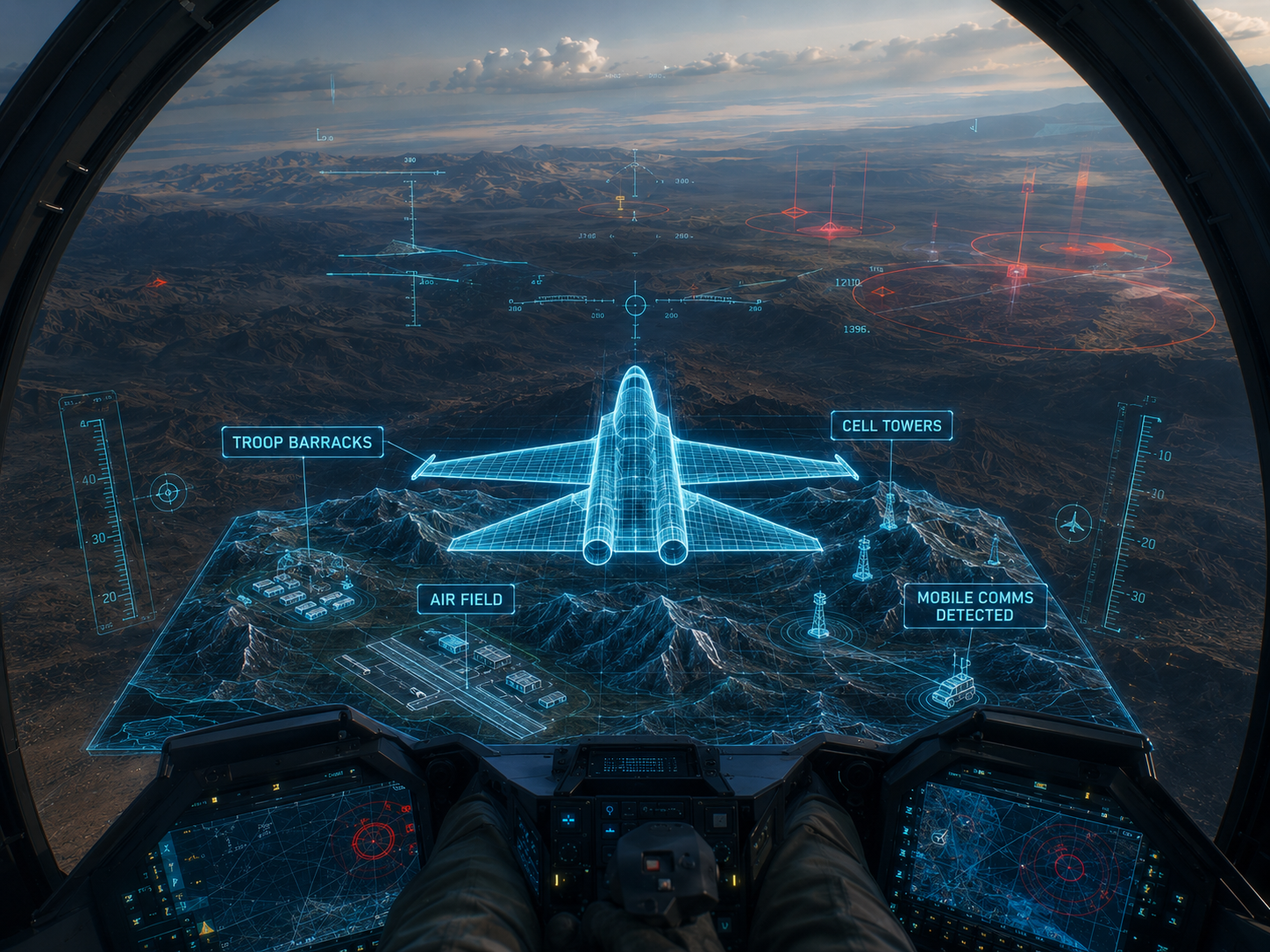
Under contract, we developed a custom version of our pod and created an experience that combined cinematic VR, voice-activated interaction, real-time holographic flight displays, and synchronized physical motion. Rather than merely showing future-flight concepts, the prototype allowed audiences to experience them as part of an integrated cockpit simulation.
As Lead Creative Producer, I guided the overall experience design and collaborated with the client on narrative framing. I interviewed career fighter pilots and reviewed human-factors research to understand how pilots process visual and spatial information under pressure. That research informed the volumetric interface design and the way critical information was prioritized under cognitive load.
I also oversaw scripting and previs, helping align the emotional arc, avionics concepts, interface behavior, and motion effects into a cohesive experience.
The prototype premiered at a national aerospace trade show and was later installed permanently in the client’s advanced R&D lab, where it continued to serve as a demonstration of future-flight concepts and a touchstone for internal innovation.
Visuals and process artifacts have been reconstructed to convey the nature of the work. No original or proprietary project assets are shown. Client and project details withheld under NDA.
Case Study 04: NovaWurks — Discovery and Product Design for a DARPA-Backed Aerospace Platform
Role: Lead Producer via StoryWorks360
Developed in collaboration with Cloudesign and NovaWurks
NovaWurks had developed a novel modular approach to spacecraft design, using small autonomous “satlets” that could be assembled into larger on-orbit systems. Because the DARPA-backed effort included a public-facing requirement, the company needed an externally facing application that could explain the technology while also functioning as a practical tool for exploring satellite configurations.
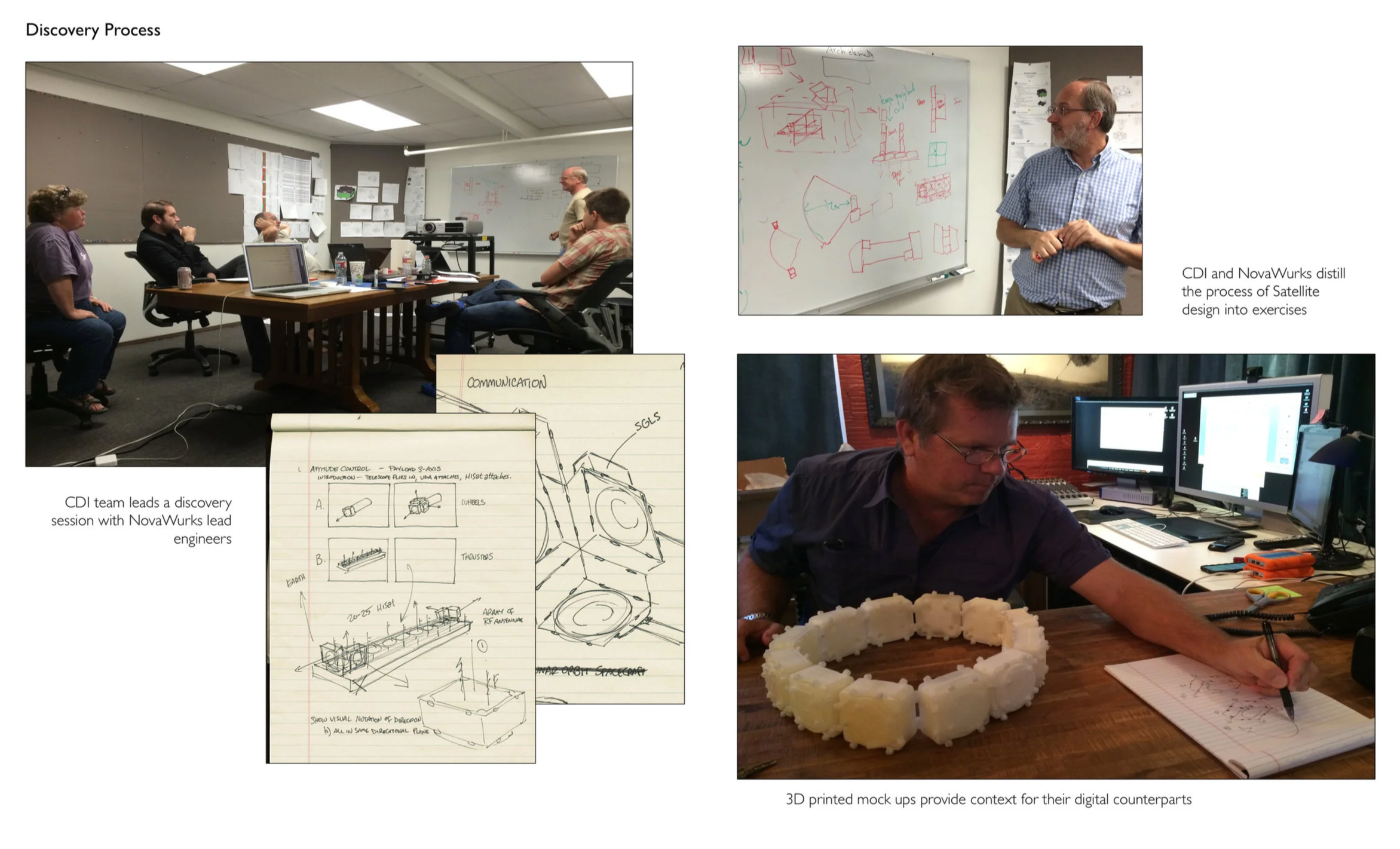
I was brought in as Lead Producer to help turn a highly technical aerospace concept into a structured user experience. My creative partner led the 3D modeling and motion-graphics direction; my role was to supply the product rigor: discovery, requirements, user research, interaction design, usability testing, and delivery coordination.
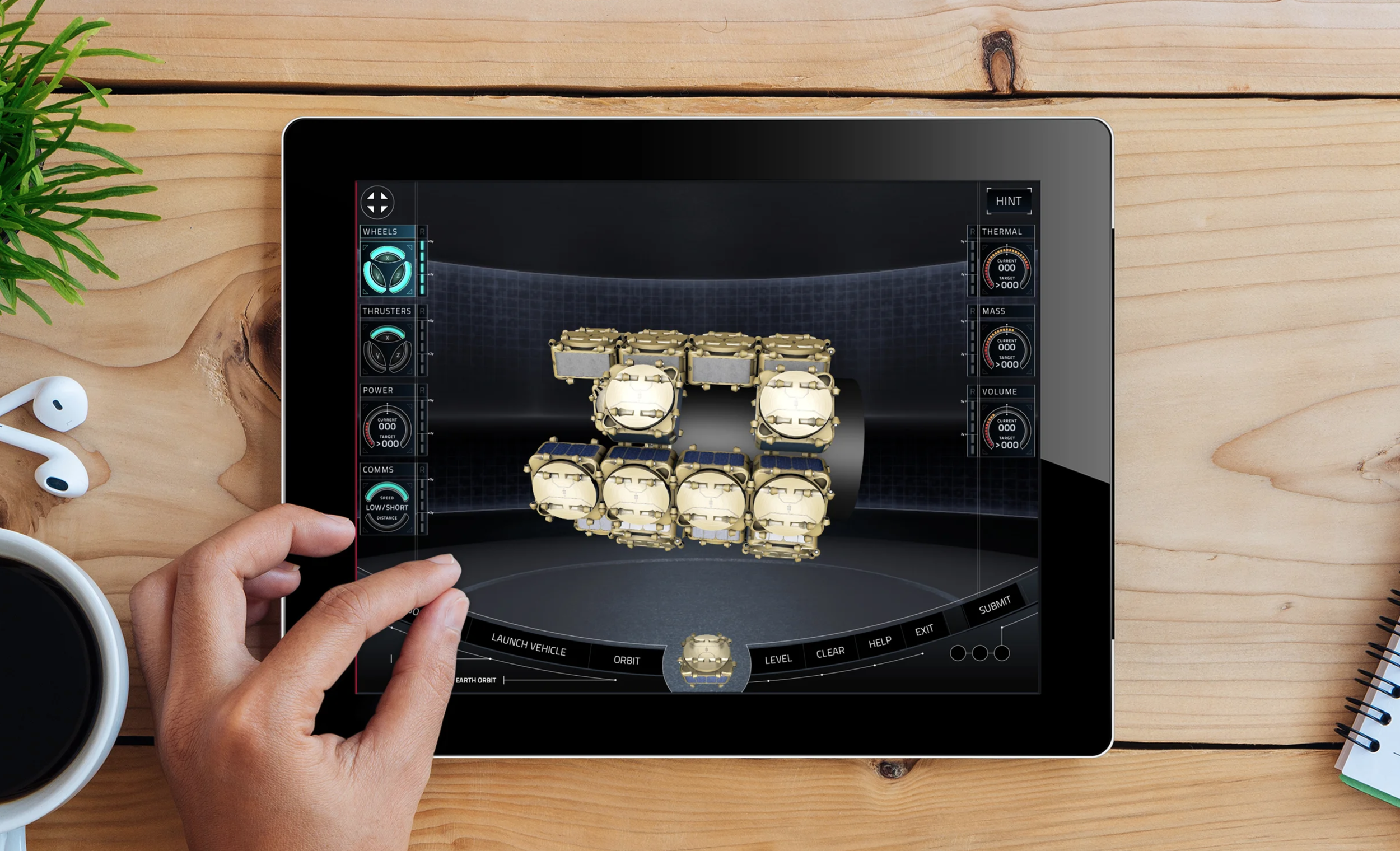
Working with NovaWurks engineers, I helped translate their technical model into an interactive satellite-building environment. Users could assemble a virtual spacecraft from modular components, test configurations against real-time metrics, and evaluate constraints such as attitude control, power, communications, thermal performance, mass, volume, and launch-vehicle fit.
I led the user-centered design process from discovery through final UI/UX interaction design. That included digesting technical documentation, conducting stakeholder interviews, developing user profiles, mapping workflows, directing wireframes, and coordinating the evolution of the interface into a Unity-based application combining 2D controls with 3D spacecraft visualization.
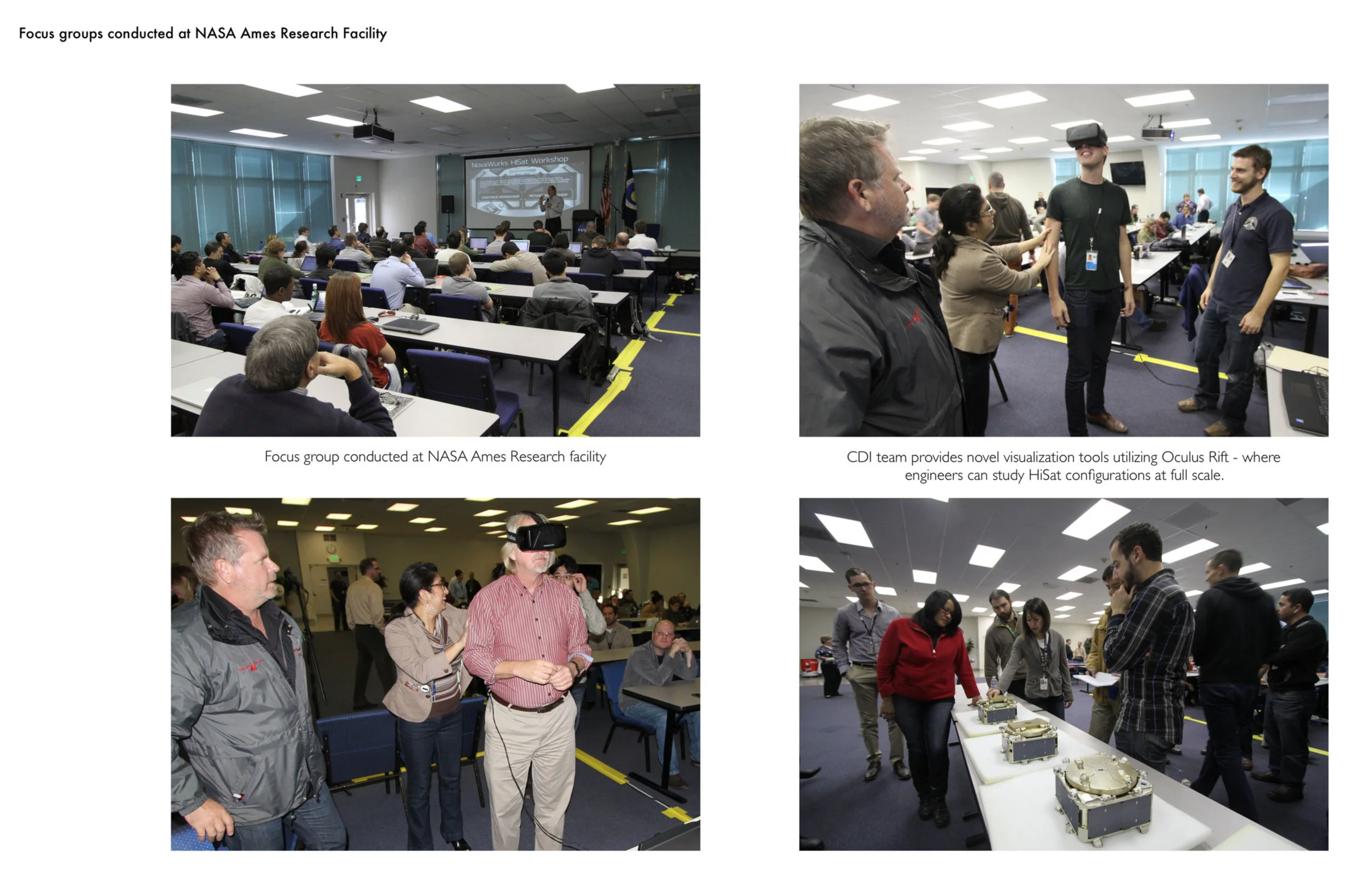
To validate the approach, I designed and led focus-group studies with NASA engineers at NASA Ames. Those sessions helped identify the application’s strongest value: a fast, iterative modeling tool for exploring configurations, understanding tradeoffs, and communicating design intent.
The final product translated a complex modular spacecraft architecture into an interactive design and learning tool for expert users.

Case Study 05: Borderland — From Original Concept to Worldwide Distribution
Role: Co-Writer | Director | Creative Originator (via Storyworks360)
I was traveling across the country on a voyage of discovery with two friends when we stumbled across a true story so harrowing I couldn’t let it go: a young American kidnapped and murdered by a narco cult near the Texas–Mexico border. What started as personal fascination quickly turned into a creative mandate—to adapt the events into a feature that was both deeply cinematic and emotionally authentic.
I originated the concept, co-wrote the screenplay, and played a key role in securing financing. Producer Lauren Moews of Tonic Films brought the track record of Cabin Fever; that success, together with my pitch and presentation to Lionsgate’s head of distribution, helped secure a distribution commitment before production. With that commitment in place, we raised the $5 million production budget from other sources. Days before filming began, a major piece of our financing unexpectedly fell through. With crew on the ground and momentum building, I was faced with a hard choice: shut down and regroup—or push forward against the odds.
I rallied the team to push forward.
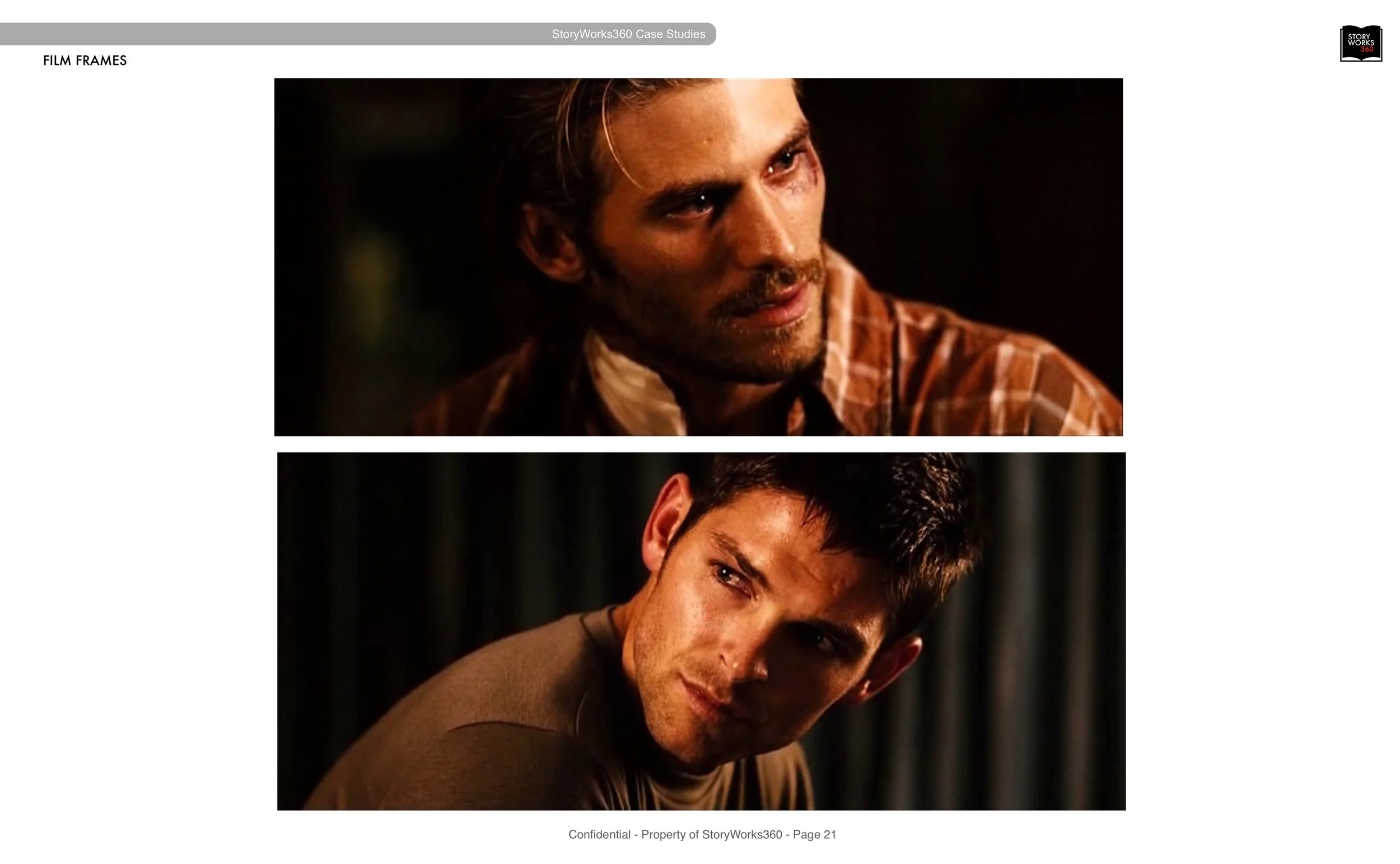
We found a way to close the gap, and kept the production on track. I directed the film on location in Mexico, working closely with cast and crew to build a world full of psychological tension and dread. We cast Sean Astin and Rider Strong in lead roles, and completed the film on schedule.
Borderland premiered in U.S. theaters and was distributed worldwide, earning praise for its gritty, grounded style and provocative subject matter. The experience cemented my foundation as a narrative director and gave me firsthand insight into how creative vision, leadership, and pure determination can bring a story to life.


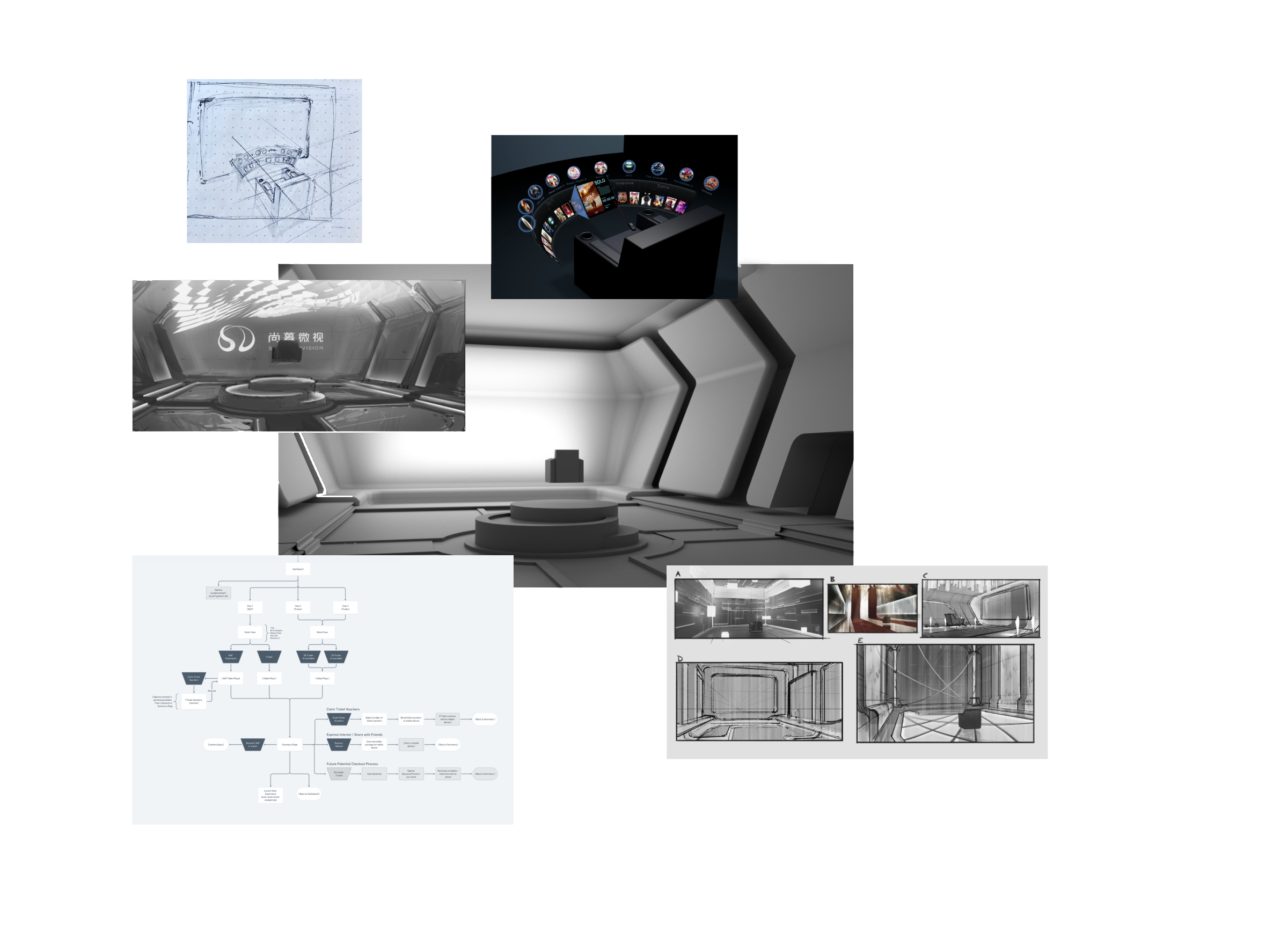
Innovation Highlight: VR Shopping Experience for Theater Chain in Shanghai
Role: Executive Producer | Creative Director (via Storyworks360, executed by Ayzenberg)
Developed first-of-its-kind immersive VR Lounge and Shopping Experience for a leading Chinese theater chain where patrons could view 360 degree trailers for upcoming films and purchase tickets. Designed for use in theater lobbies, the experience combined intuitive user flow with interactive storytelling to drive engagement. Functional front end prototype delivered, approved by client, and went into development.